
Home  Improve my home How to retrofit Generation Solar panels
Plug-in solar
A new way to generate your own electricity.
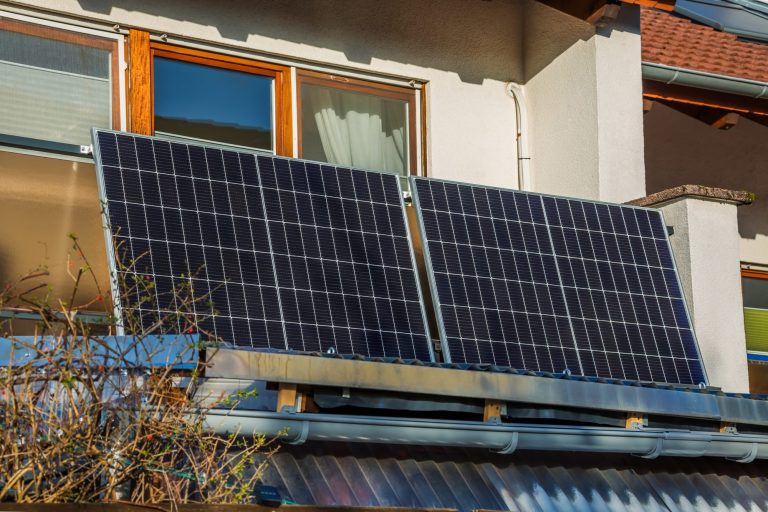
New UK Government regulations let you plug solar panels into a standard UK wall socket. Estimates suggest these could help households save up to £100 per year on their electricity bills.
What is plug-in solar?
Plug-in solar works in a similar way to traditional rooftop solar panels, but on a much smaller scale.
Designed for self-installation, these systems can help households reduce the amount of electricity they buy from the grid and lower their energy bills. Plug-in solar can provide up to 20% of household electricity use.
Who could benefit?
Plug-in solar could be particularly useful for:
- Renters (with landlord permission)
- People living in flats or apartments
- Households unable to install rooftop solar
- Anyone looking for a lower-cost way to generate renewable electricity at home
How much could I save on energy bills?
Savings depend on where you live, how the panels are positioned and how much of the electricity you use while it’s being generated.
Estimate annual savings are expected to be around £70 to £150 per year.
With an output limited to 800 watts, plug-in solar will likely cover your “always-on” electrical items, like fridges and devices on standby.
To maximise savings, try to use electricity during daylight hours, for example by running washing machines, dishwashers or other appliances when the panels are generating power.
You’ll find more helpful tips for making the most of solar power on our Living with solar panels page.
How much are plug-in solar panels and where can I buy them?
Solar plug-in kits currently cost between £400 and £800.
Retailers such as Currys, B&Q, Amazon and even some supermarkets are preparing to sell plug-in solar, plus several online retailers.
We recommend buying plug-in solar from a reputable high street retailer, or their website, to ensure it complies with the rules set out above.
What should I know before buying plug-in solar?
Only approved plug-in solar products that meet new UK safety requirements can be connected through the new plug-in route. Before buying:
- Check that the product is approved for use in the UK. Search for your device on the ENA Connect Direct LCT Device register.
- Make sure you have a suitable outdoor location with good access to sunlight. Current devices available in the UK are more suited to garden location.
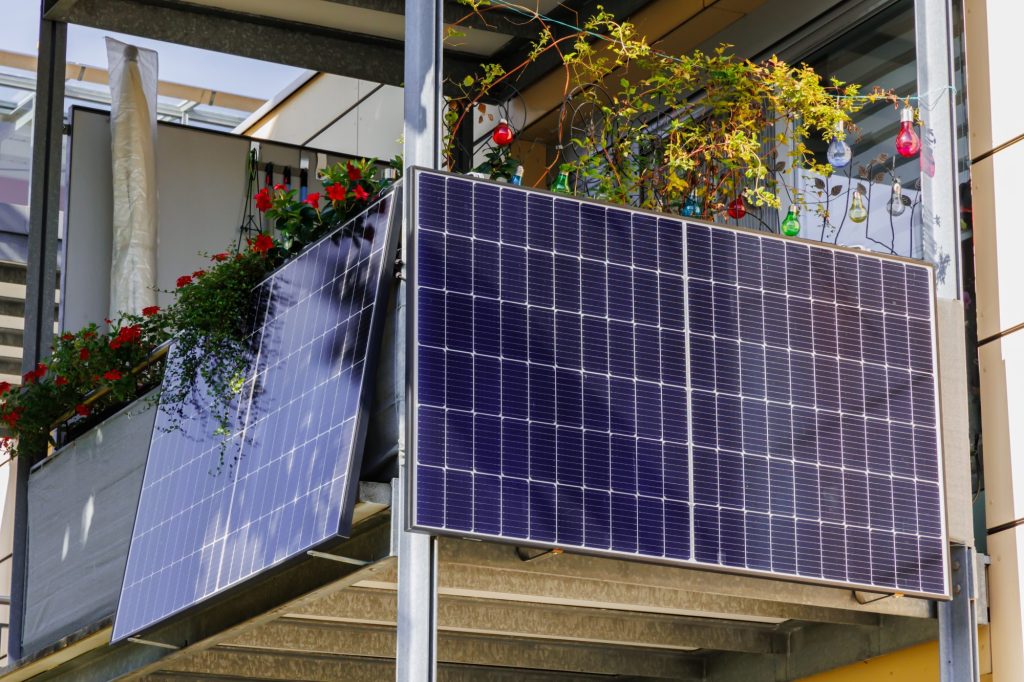
- If you’re considering installing plug-in solar on your balcony, it’s likely you’ll need planning permission.
- Have your home’s electrical system checked by an electrician if you have concerns about your wiring.
- Do not plug your solar into a standard household extension lead. Extension leads and adaptors are at risk of overheating or overloading. Instead, check the length of the plug-in solar panels’ cable to ensure it can be installed in your desired location at home.
- Verify whether any permissions are required if you rent your home.
Plug-in solar is best suited to reducing daytime electricity costs rather than exporting to the grid for extra income.
Systems are capped at 800W output, and battery storage isn’t included in the simplified plug-in route. Only complete products approved against the Interim Product Specification and listed on the ENA G98 Type Test Register qualify for the new plug-in route.
You’ll also need to submit a G98 notification to your Distribution Network Operator (DNO) within 28 days of connecting your plug-in solar. Find out who your DNO is here.
Do I need to register my plug-in solar panels?
Yes. You’re legally required to register any plug-in solar panel device before you use them in the UK.
You can register your panels here. You name, address and device information will be required as part of the registration.
Funding and support
There are currently no government grants specifically for plug-in solar kits. However, some households may be eligible for wider energy-efficiency funding schemes that support solar technologies as part of broader home improvement measures.
Which other countries use plug-in solar?
Plug-in solar is becoming popular across mainland Europe, particularly in Germany and Spain. It’s estimated that around 1.5million balconies in Germany have the panels, which are affectionately known as Balkonkraftwerk (balcony power plant).
Is this page useful?